
Japanese Roof Tiles
Monday June 16, 2025 – Sunday, November 30, 2025
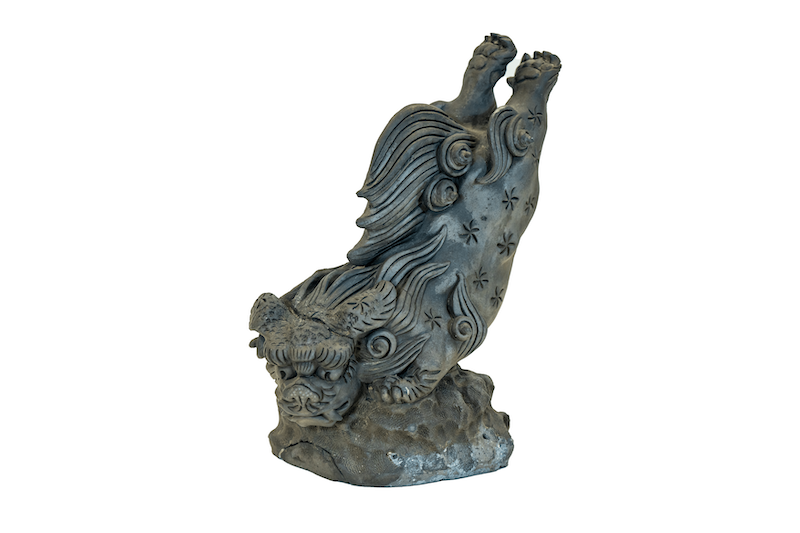
Visitors to the Yamato-kan have the opportunity to see and learn about Japanese roof tiles from the Morikami Museum Collection. Japanese roof tiles (kawara-瓦) originated in China, and their use in Japan can be traced back to the 7th century. Buddhist temples used these clay tiles exclusively until the Nara period (mid to late 8th century). Slowly, other buildings began to use kawara due to their fire-resistant nature and ability to keep out the rain and snow. During the Edo period (1603-1868), their popularity spread, leading to many creative designs and uses. To date, there are over 1,000 varieties of kawara in use. The tiles are made from clay using molds to form their shapes, and then left to dry. The clay is then polished to help bring out their unique shine and luster. After they are fired in a kiln, carbon particles attach themselves to the clay, giving them their characteristic smoky grey color. Japanese folklore and motifs abound in the designs of the pieces, each offering a wish for protection, good fortune, or to ward off demons and bad spirits.