
Embark on a thrilling literary journey with Benefactor member Christine Carton and fellow Morikami members as they kick off a brand new season of riveting book explorations!
To join the Morikami Book Club, please reach out to Christine Carton at christinec@gate.net.
All meetings will be held on the second Wednesday of each month at 12 pm at the museum.
Morikami Book Club 2025-2026 Selection
May 8 – Author Zack Davison will lecture on: Yokai Japanese Supernatural Creatures at 7:00PM in the auditorium.
This lecture will complement the new exhibition Yokai: Scenes of the Supernatural in Japanese Woodblock Prints opening on May 9th, 2026. Get your lecture tickets in advance online.
May 13 – No Longer Human. By: Osamu Dazai
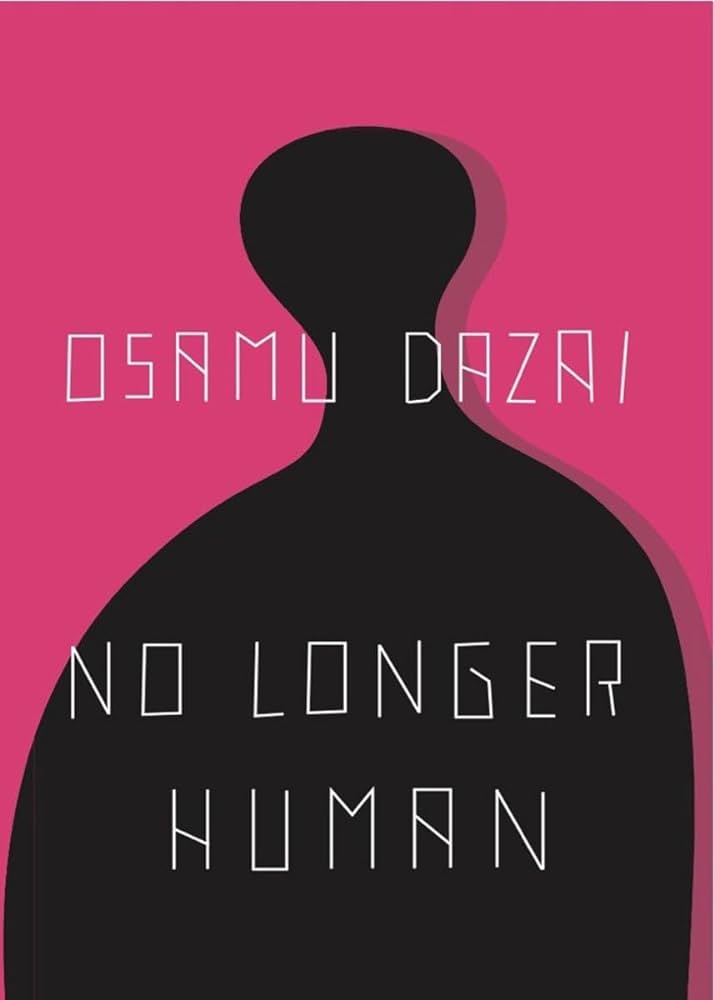
“Mine has been a life of shame. I can’t even guess what it must be to live the life of a human being.”
Portraying himself as a failure, the protagonist of Osamu Dazai’s NO LONGER HUMAN narrates a seemingly normal life even while he feels incapable of understanding human beings. His attempts to reconcile himself to the world around him begin in early childhood, continue through high school, where he becomes a “clown” to mask his alienation, and eventually lead to a failed suicide attempt as an adult. Without sentimentality, he records the casual cruelties of life and its fleeting moments of human connection and tenderness.
Still one of the ten bestselling books in Japan, NO LONGER HUMAN is an important and unforgettable modern classic.
June 10 – The Forest of Wool and Steel. By: Natsu Miyashita

Tomura is startled by the hypnotic sound of a piano being tuned in his school. It seeps into his soul and transports him to the forests, dark and gleaming, that surround his beloved mountain village. From that moment, he is determined to discover more.
Under the tutelage of three master piano-tuners – one humble, one cheery, one ill-tempered – Tomura embarks on his training, never straying too far from a single, unfathomable question: do I have what it takes?
Set in small-town Japan, this warm and mystical story is for the lucky few who have found their calling – and for the rest of us who are still searching. It shows that the road to finding one’s purpose is a winding path, often filled with treacherous doubts and, for those who persevere, astonishing moments of revelation.
Thank you for a wonderful book club season! Have a lovely summer, and we look forward to starting a new season with the book selections below.
Morikami Book Club 2026-2027 Selection
October 21 – The Tattoo Murder. By: Akimitsu Takagi
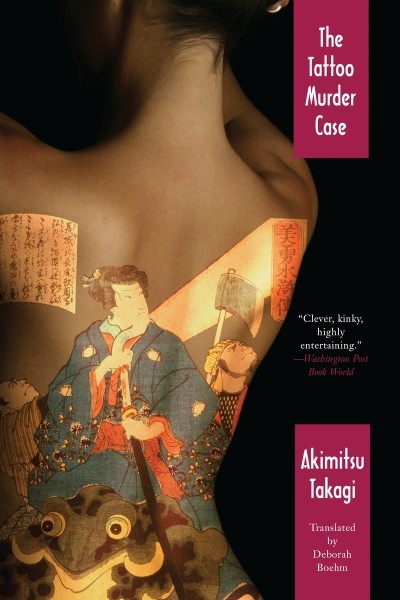
Kinue Nomura survived World War II only to be murdered in Tokyo, her severed limbs discovered in a room locked from the inside. Gone is the part of her that bore one of the most beautiful full-body tattoos ever rendered. Kenzo Matsushita, a young doctor who was first to discover the crime scene, feels compelled to assist his detective brother, who is in charge of the case. But Kenzo has a secret: he was Kinue’s lover, and soon his involvement in the investigation becomes as twisted and complex as the writhing snakes that once adorned Kinue’s torso.
November 11 – A Japanese Art Journey. By: Meher McArthur
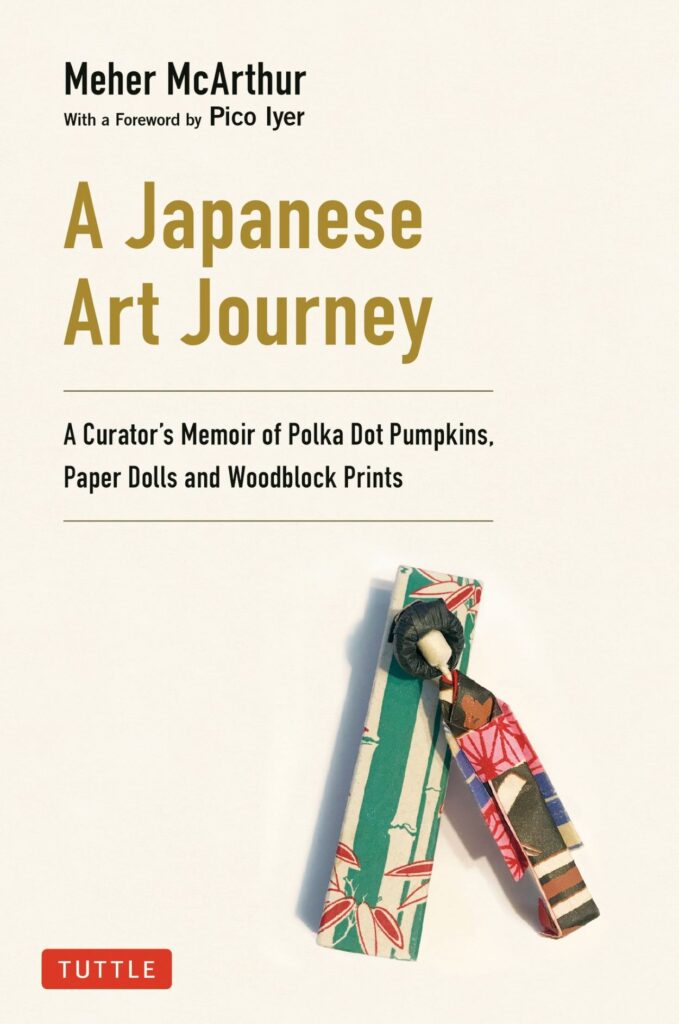
In this engaging memoir, Japanese art historian and curator Meher McArthur transports you into the extraordinary world of Japanese art — from ceramics, swords, prints and textiles to Buddhist art, folk painting, contemporary art and animation. One artwork and one language lesson at a time, we follow McArthur as she unspools a compelling narrative of curiosity and inspiration, personal and cultural growth, with heartbreak and resilience. This book will provide avid art lovers with new ways of seeing and understanding the power of art, not only to inspire but to illuminate one’s place in the world.
December 9 – Guilt. By: Keigo Higashino
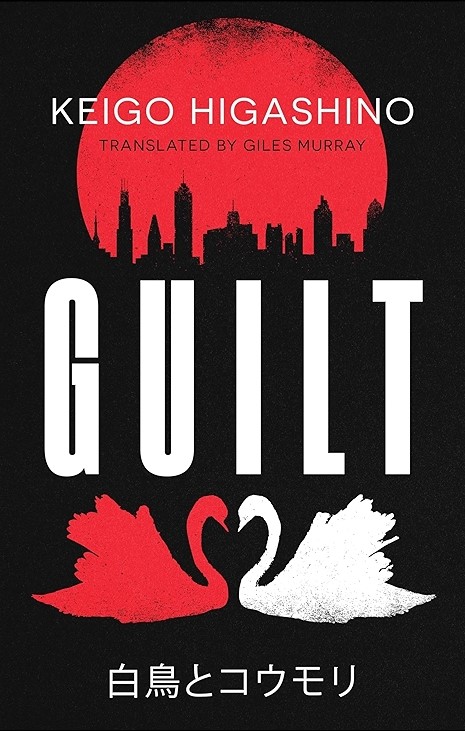
A tour de force crime novel from one of the international masters of the form, where a simple murder case questions the simple notions of good and evil, guilt and redemption Homicide Detective Godai of the Tokyo Metropolitan Police Department is assigned to investigate the death of a lawyer, Kensuke Shiraishi, whose body was found on a Central Tokyo riverbank. His investigations lead him to one Tatsuro Kuraki, who claims to have had limited contact with Shiraishi – but, surprising the investigators, Kuraki not only confesses to the lawyer’s murder, but another one from thirty years ago – for which another man was arrested and died in custody before trial. This brings unexpected resolutions to two cases but there is one problem: to Detective Godai the confession rings false.
And Godai is not the only one who cannot accept Kuraki’s explanation of both murders and his professed motives. The confessed murderer’s son and the victim’s daughter both feel strongly that both the act and the motive claimed are untrue.
As Godai investigates further, he discovers that the relation between the murder of thirty years ago and the recent one is complex, raising multi-faceted questions of guilt and innocence. Guilt is a rich novel about crime and its aftereffects on those left behind by both the victim and perpetrator, a twisting, compelling work that will surprise and astonish.
January 13 – The Mask Carver’s Son. By: Alyson Richman
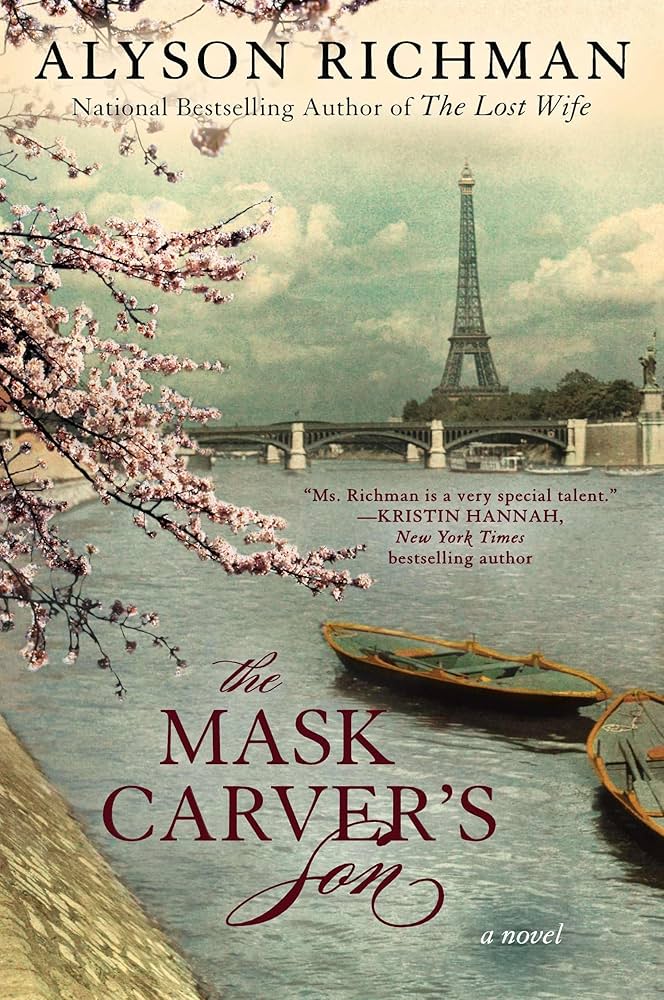
Set in turn of the century Japan in the world of the Noh theater, and in Paris during the heady days when French Impressionism was the avant-garde, this heartbreaking, beautifully written novel tells of a young Japanese artist who sacrifices everything: family, love and wealth for his art.
A Master Noh carver dedicates his life to his art, turning his back on love after a series of tragic events leaves him devastated. Kiyoki, his only son, defies his father and the demands of cultural tradition to follow his dream of becoming a painter in the western style. Kiyoki journeys to Paris, where he lives the life of an exile, unable to break the bonds of tradition, until he finds his heart leads him back to Japan, where he at last discovers himself as an artist.
January 15 – Author Alyson Richman will lead a discussion about her book in the theater at 6:30 p.m. There will be an opportunity to ask questions and discuss Richman’s recent writings. A book signing will follow.
February 10 – The Martyr and the Red Kimono. By: Abe Naoko
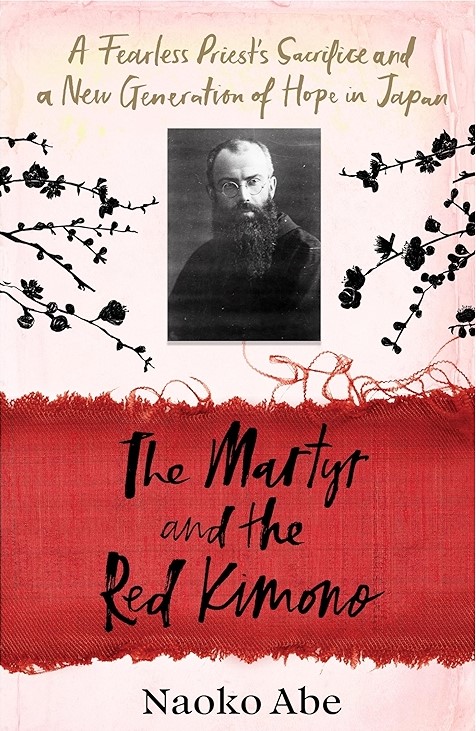
On the 14th of August 1941, a Polish priest named Maximilian Maria Kolbe was murdered in Auschwitz.
Kolbe’s life had been remarkable. Fiercely intelligent and driven, he founded a movement of Catholicism and spent several years in Nagasaki, ministering to the ‘hidden Christians’ who had emerged after centuries of oppression. A Polish nationalist as well as a priest, he gave sanctuary to fleeing refugees and ran Poland’s largest publishing operation, drawing the wrath of the Nazis. His death was no less remarkable: he volunteered to die, saving their life of a fellow prisoner.
It was an act that profoundly transformed the lives of two Japanese men. Tomei Ozaki was just seventeen when the US dropped an atomic bomb on Nagasaki, destroying his home and his family. Masatoshi Asari worked on a farm in Hokkaido during the war and was haunted by the inhumane treatment of prisoners in a nearby camp. Forged in the crucible of an unforgiving war, both men drew inspiration from Kolbe’s sacrifice, dedicating their lives to humanity and justice. Ozaki followed in his footsteps and became a friar. Asari created cherry trees as peace offerings.
In The Martyr and the Red Kimono, award-winning author Naoko Abe weaves together a deeply moving and inspirational true story of resistance, sacrifice, guilt and atonement.
March 10 – Tokyo Express. By: Seicho Matsumoto

“An irresistible Hitchcockian gem: a fiendishly plotted crime novel told in crisp, elegant prose.”—Paula Hawkins, author of The Girl on the Train
In a rocky cove at Hakata Bay, the bodies of a young and beautiful couple are discovered. Standing on the cold beach, the police see nothing to investigate: The flush of the couple’s cheeks and the empty juice bottle speak clearly of cyanide, of a lovers’ suicide. But in the eyes of two men, senior detective Torigai Jutaro and Kiichi Mihara, a young gun from Tokyo, something is not quite right. Together, they begin to pick at the knot of a unique and calculated crime.
April 14 – Days at the Morisaki Bookshop- Volume 1. By: Satishi Yagisawa
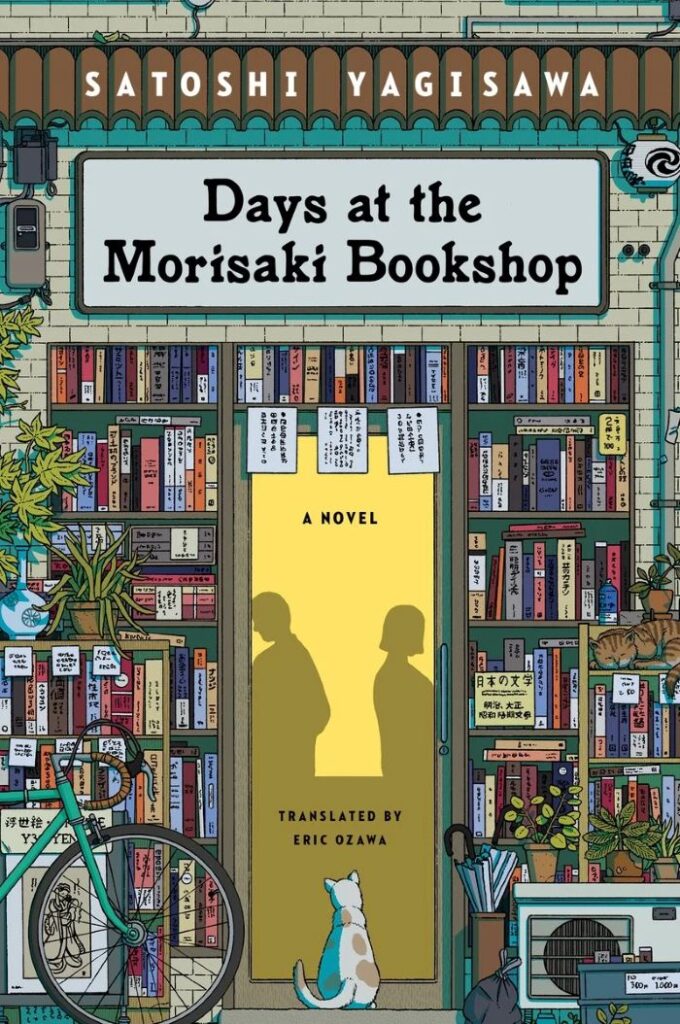
Twenty-five-year-old Takako has enjoyed a relatively easy existence—until the day her boyfriend Hideaki, the man she expected to wed, casually announces he’s been cheating on her and is marrying the other woman. Suddenly, Takako’s life is in freefall. She loses her job, her friends, and her acquaintances, and spirals into a deep depression. In the depths of her despair, she receives a call from her distant uncle Satoru.
An unusual man who has always pursued something of an unconventional life, especially after his wife Momoko left him out of the blue five years earlier, Satoru runs a second-hand bookshop a true haven for anyone who loves books about books—in Jimbocho, Tokyo’s famous book district. Takako once looked down upon Satoru’s life. Now, she reluctantly accepts his offer of the tiny room above the bookshop rent-free in exchange for helping at the store. The move is temporary, until she can get back on her feet. But on her healing journey in the months that follow, Takako surprises herself when she develops a passion for Japanese literature, becomes a regular at a local coffee shop where she makes new friends, and eventually meets a young editor from a nearby publishing house who’s going through his own messy breakup. But just as she begins to find joy again, Hideaki reappears, forcing Takako to rely once again on her uncle, whose own life has begun to unravel. Together, this unlikely found family of seeming opposites work to understand each other and themselves as they continue to share the wisdom they’ve gained in the bookshop.
May 12 – Folktales of Japan. By: Kyota Ko

Once upon a time in Japan, there was a province where parents who reached the age of sixty had to be abandoned deep in the woods on a hill called Ubasute-yama… Was the story based on a real practice?
History is written and re-written by the victors of history, but folktales are told and retold by folks of the ordinary. The truths they intend to convey can differ greatly…
A collection of 28 Japanese folktales coupled with a digestible explanation of the cultural and historical background of each. An excellent entry point into learning Japanese culture.
June 9 – The Boy and the Dog. By: Seishu Hase
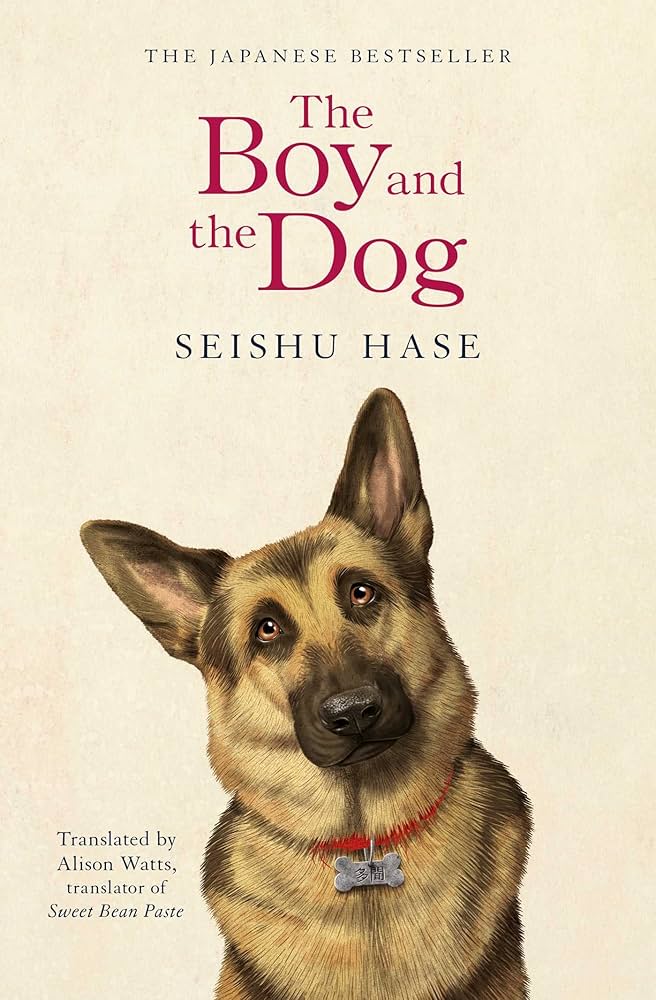
Following a devastating earthquake and tsunami, a young man in Japan finds a stray dog outside a convenience store. The dog’s tag says “Tamon,” a name evocative of the guardian deity of the north. The man decides to keep Tamon, becoming the first in a series of owners on the dog’s five-year journey to find his beloved first owner, Hikaru, a boy who has not spoken since the tsunami. An agent of fate, Tamon is a gift to everyone who welcomes him into their life.
At once heartrending and heartwarming, intimate and panoramic, suspenseful and luminous–and deepened in its emotion by the author’s mastery of the gritty details and hardscrabble circumstances that define the lives of the various people who take Tamon in on his journey–this bestselling, award-winning novel weaves a feel-good tale of survival, resilience, and love beyond measure.